
What is plastering and skimming?
Skimming is the thin finishing coat of plaster, usually two passes of multi-finish, applied over existing plaster or new plasterboard to leave a smooth, hard surface. Full plastering goes further: the old, failing plaster is removed back to the brick or block, a backing coat is applied to straighten the wall, and then the finish coat goes on top.
Both jobs look simple when they are done well, which is exactly why they are so easy to get wrong. The difference between an average finish and a great one shows the moment light hits the wall from a window or a spotlight. Ash Plastering works to a finish you can paint straight onto after drying, with sharp corners, straight reveals and no trowel marks.
When you might need it
- Walls are cracked, crazed or uneven after years of redecorating
- Wallpaper has been stripped and the surface underneath is damaged
- Old plaster sounds hollow when tapped or is coming away from the wall
- You have had rewiring, new heating pipes or a new kitchen fitted and need making good
- Artex or textured coatings need covering for a modern flat finish
- You are preparing a home for sale or for a full redecoration
The Ash Plastering process
- 01
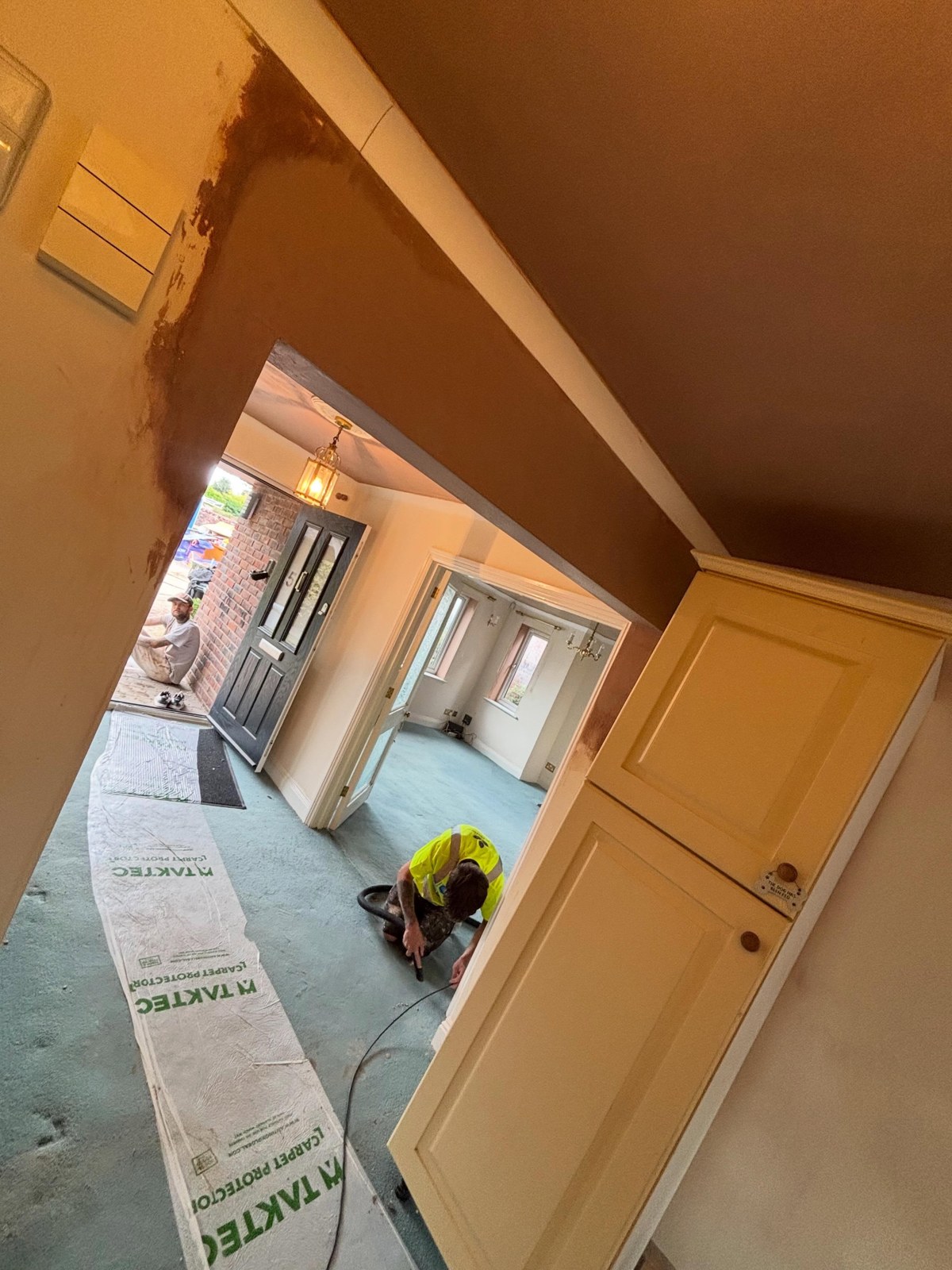
Protect
Floors, stairs and furniture are sheeted and taped, and sockets and switches are loosened or masked so the plaster can run behind the plates.
- 02
Prepare
Loose material is removed, cracks are scrimmed, beads are fixed to external corners and the surface is treated with the right bonding agent for its suction.
- 03
Apply
A backing coat where needed, then two coats of finish plaster, trowelled up at the right moment so the surface closes to a polished, even face.
- 04
Clean up
Edges are cut clean, the room is swept and tools are washed off site. You get simple guidance on drying times and mist coating.
What affects the price
Every property is different, so we give a fixed, written quote after a free site visit rather than a guess over the phone. The main things that shape the cost are:
- The size of the room and the number of walls and ceilings involved
- Whether the existing plaster can be skimmed or needs removing back to brick
- The condition of the background and how much making good is needed
- Ceiling height, staircases and any access equipment required
- Whether furniture is in place or the room is already empty
- Extras such as new angle beads, coving removal or Artex covering
Common problems it fixes
- Hairline cracking and old filler patches showing through paint
- Blown plaster that crumbles or sounds hollow
- Bumpy, wavy walls that look worse under modern lighting
- Damaged surfaces after removing tiles, wallpaper or fixtures
Not sure whether this is the right service? Send us a few photos and we will tell you honestly what your walls need.