
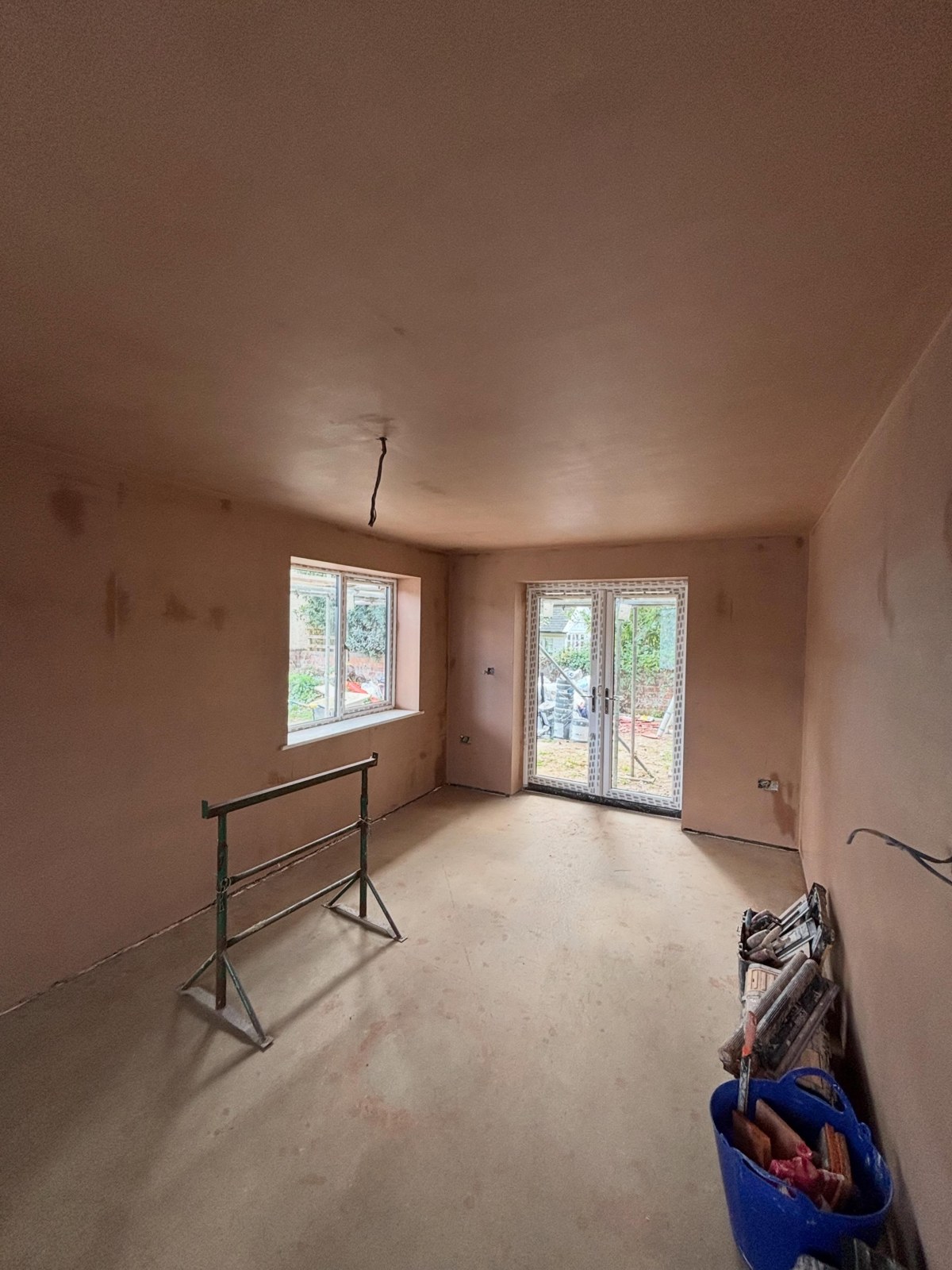
What is dry lining and plasterboarding?
Dry lining means fixing plasterboard to walls, ceilings or a metal or timber frame, instead of applying wet backing plaster to the masonry. It is quicker to dry out, gives very straight surfaces and makes it easy to add insulation, acoustic boards or moisture resistant boards where the room needs them.
Most renovation, extension and loft projects rely on dry lining at some stage. The board is only as good as the way it is fixed, so we take care with setting out, fixings, joints and corners. The boarded surface is then either skimmed for a solid plaster finish or taped and jointed, depending on the job.
When you might need it
- New stud partitions to divide or reshape rooms
- Loft conversions and extensions that need walls and ceilings boarding
- Uneven or damaged solid walls that need a new straight face
- Adding insulated board to cold external walls
- Bathrooms and kitchens that need moisture resistant board
- Old lath and plaster ceilings that have failed
The Ash Plastering process
- 01
Set out
We check walls and ceilings for level and plan board layout to keep joints staggered and cuts tidy around openings.
- 02
Fix
Boards are fixed with the correct method for the background: screws to studs and joists, or dot and dab adhesive to masonry.
- 03
Finish
Joints are scrimmed and the board is skimmed, or taped and jointed, to give a smooth surface with crisp corners.
- 04
Tidy
Offcuts and waste are cleared, the area is swept and you are left with a room ready for decorating once dry.
What affects the price
Every property is different, so we give a fixed, written quote after a free site visit rather than a guess over the phone. The main things that shape the cost are:
- The area of walls and ceilings to be boarded
- The type of board, such as standard, insulated, acoustic or moisture resistant
- Fixing method and whether a frame or battens are required
- Skim finish or tape and joint finish
- Removal and disposal of old plaster, laths or boards
- Access, ceiling heights and working around existing fittings
Common problems it fixes
- Cold, uneven solid walls
- Collapsed or sagging lath and plaster ceilings
- Rooms that need new layouts or partitions
- Long drying times holding up a renovation
Not sure whether this is the right service? Send us a few photos and we will tell you honestly what your walls need.